
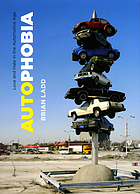
 I finally finished reading Autophobia over the weekend. It wasn't a hard book to get through - the writing is very engaging, but the book gave me so much to think about that, long periods of deep thinking were needed on a regular basis. I read this book over the course of nearly 8 months - so when I state that I spent a lot of time thinking about the 200+ pages, I really did spend a lot of time thinking about what I was reading.
If it isn't evident from reading this blog, I have a love-hate relationship with the automobile with my feelings leaning more on the hate side. I personally love driving and I especially love driving large pickup trucks. I find driving to be very enjoyable, relaxing and a luxurious activity. My general attitude toward the automobile is often the result of feelings I cannot control despite my attempts to do so - my animal instinct, if you will. My feelings stem from my inability to accept reality as it exists: my refusal to acknowledge that the automobile has provided many people with many benefits, provided much comfort and security.
My inability to accept this reality and the knowledge that many people want to drive stems from my knowledge that the automobile is still a very new invention, but one that has changed history in numerous ways.
Brian Ladd's Autophobia, has finally allowed me to accept reality. I've finally gotten to a place where I don't have to hate the automobile, where I can acknowledge the power, the convenience, the troubles and its influence it has had on the world I'm currently living in. The book has allowed me to gain a deeper understanding into human beings and our complex relationship with the world around us.
In other words, I no longer feel smug when I read about people complain about increasing gas prices - I have managed to develop genuine empathy. Yes, I'm the ass who used to gloat when people suffered.
For the longest time, I think a lot of my hate stemmed from the fact that I had a visceral belief that those who owned and operated an automobile were happier than me. I was blinded to the fact that the automobile is both a blessing and a curse to the owner. I allowed myself to engage in thoughts that aren't very nice. And those thoughts made me feel terrible about myself as a human being.
---
Unless you're living under a rock, you're probably aware of the oil spill that has been ongoing for a while now. You've probably seen the photos depicting birds and animals drenched in oil, about the destruction of Grand Isle and all the other things being written about and lamented over.
For the first few days, I avoided reading or watching anything about the oil spill. Then I did, and temporarily spiraled into depression and then snapped out of it just as quickly.
The reason I snapped out of that pit was because I began to see my own implicit role in the disaster. I am equally to blame in the mess. My life and lifestyle and my very existence contributed to the disaster in untold ways. While I do try to be mindful in how I live, I have done things that would not be possible in a world without (still) cheap oil. Actions that would not be possible if companies all over the world were not drilling into the depths of the earth. Blaming some third party justifies and elevates my own consumption patterns without acknowledging my implicit role in this oily mess.
Putting the blame on external entities allowed me to engage in a perverse combination of self-hate and smugness. The mess happened because of our collective desires and wants and inability to let go of all the comforts, conveniences and cheap goods that make our lives more comfortable and convenient. Autophobia allowed me to understand and accept my role in how everything around me operates.
So when I state that the Autophobia has affected profound changes in the way I view the world, it is not an exaggeration. I feel that as long I'm living in a world where my daily world is surrounded by the automobile, I will be much more at peace acknowledging their power and presence and ubiquity, rather than not.
And so I'll end this post with Autophobia's conclusion,
It does make sense - if we understand the automobile to be a fundamentally benign (or desirable) tool. It makes sense if we assume that the earth and the market and the cities will somehow accommodate hundreds of millions of additional cars in China and India. It makes sense if we believe that our increasingly car-centered lives are indeed the lives we want. It makes sense if we can agree that the dark side of automobility is a price worth paying for its blessings. But we have never agreed about these matters, and we never will.
I originally posted this review, on my bike blog.


 Sewing Green: 25 Projects Made with Repurposed and Organic Materials


