Showing posts with label environment - nature. Show all posts

Tuesday, November 3, 2009

Texas Wildscapes: Gardening for Wildlife

Quite unexpectedly, I had the opportunity to enjoy Kelly Conrad Bender's Texas Wildscapes: Gardening for Wildlife (Texas A&M University Press, 2009). Bender, an urban wildlife biologist with the Texas Parks and Wildlife Department has definitely done her homework, for what began as a series of pamphlets has become an extensive guide into transforming your property into a wildlife habitat.

Don't have 1000 or even 100 acres? It doesn't matter, a series of "wildscapes" throughout a neighborhood can still create a sanctuary for an amazing variety of plant and animal life. Similar to other contemporary authors like Heather Flores (Food Not Lawns), Bender challenges us to rethink sprawling suburbia and gives us all the tools to do it!

Of course, first thing's first - Texas actually has 10 ecological regions, each vast and varied as to rainfall, temperature, and plant/wildlife. Bender describes each one, helping you determine in which you live and what plant and animal life naturally thrives there.

Next, the sky's the limit. Bender takes you through step-by-step instructions on designing your own wildscape, from mapping your property to prepping your soil to building a backyard pond, and of course includes the most important features of your wildscape - food, water, and cover.

The book concludes it's final chapters describing the native wildlife of Texas (including birds, reptiles, mammals, amphibians, insects, and spiders), how to attract them to your wildscape, and how to keep unwanted pests out. And if you still can't get enough, attached to the inside back cover of the book is a DVD that includes more extensive brochures on Texas wildlife.

To be honest, I wasn't sure what to expect when I first laid eyes on Texas Wildscapes. It wouldn't have been something I would have picked up on my own. But I was quickly entranced by this alternative to the standard lawn, the opportunity to lighten our ecological footprint by truly sharing our living space with the nature suburbia seems so intent on pushing out. Not to mention, I could immediately think of quite a few friends and family that would love to get their hands on a copy of this book. And hey, the holidays are coming, so check it out!

Rated: 5 out of 5 stars
Recommended: to the naturalist or environmentalist (or both) interested in rethinking lawn space
NOTE: In compliance with FTC regulation, I disclose that I received this book free of charge from the publisher as a review copy. However, this review is my own evaluation of the material, with no influence by the publisher or author.

Friday, October 16, 2009

Righteous Porkchop

The first time I heard anyone talk about industrial pig factories it was Robert F. Kennedy, Jr. What he described was so unfathomable I reasoned it must not be true or he was exaggerating. Or something. The speech was likely made at the same time the author of Righteous Porkchop, Nicolette Hahn Niman, worked for Kennedy at Waterkeeper Alliance as a staff attorney and head of a national campaign to combat pig factories.

Maybe I haven't been paying attention between the time of that speech half a dozen years ago and two weeks ago when I picked up Righteous Porkchop. I thought the pork industry had cleaned up its, please excuse me, cleaned up its shit for all I heard about it.

They haven't.

Righteous Pork may change that. NHN spends the first half of the book describing her work with the pig factories and the people and communities who worked alongside her. Which is why I didn't want to put the book down. It's not all pretty reading but the people and communities affected by the factories are.

In some ways the story is an unfolding drama. I found myself more than once, okay, a lot, routing for the local communities but NHN also shows the corner the factory owners have gotten themselves into and I couldn't help but route for them too; that they could find a way out. No one is having a good time.

There's a little bit of spying; quite a few bad politicians. There's a guy hired by the pork industry to tail NHN to community meetings. Eventually someone does have a good time and there's romance too.

The later part of the book visits industrial chicken and fish, factory dairies and beef. Did you know that it's a widespread practice to feed factory hens red dye to make the yolks of their eggs yellow? I had no idea. I also learned the correct terminology for the animals on a dairy. They are not all cows.

There's a lot to learn from Righteous Porkchop. It's a smart book with history.

My only criticism is Niman Ranch beef comes across too precious in Niman's telling. In one example she praises a retailer for carrying Niman beef, overlooking the foreign imports in their produce department. That would have been fine but she goes on to knock the produce department of another retailer that doesn't carry Niman beef.

And I loved this book. It's an important read revealing the truth that corporate meat producers don't want us to know. It's to their benefit to keep us ignorant. Righteous Porkchop's changes that though, one knowledgeable page at a time.

Rated: Four and a half stars.
Recommended: For everyone; vegetarian and meat eaters alike.

Friday, October 2, 2009

The Solution is You


Laurie David is a widely known activist promoting citizen awareness and involvement as we cope with climate destabilization prompted by global warming. For quick read on the subject readers will enjoy The Solution is You from Speaker’s Corner Books. This is a short title good for a rapid introduction to the science and activism surrounding global warming in a format that I would say most suitable for teens, older adolescents or those that just want a lickety split read.

The Solution doesn’t devour you with verbiage and facts, but gives a rapid overview of the topic as well as a slicing view of many of the well known naysayers. She cuts the right wing capitalism saviors, pseudo journalists (Jon Stossel anyone?) and even former President Bush no slack in exposing how they have portrayed, naysayed and skewed actual science in order to promote a non-environmentalist agenda. I liked that she was quite funny about it too. Riiight.

I think one of the most valuable components of the book is the recommended reading, websites, DVD selections and environmental or activist group listing. This selection led me to a rich list of further selections if I want a meatier read that might give me more facts, figures, and statistics. Her sidebars have very nice snippets of information, commentary and of course the celebrity quote or two, and jazzy chapter titles that will motivate readers such as "The Civil Rights Movement of Our Time."

All in all a quick easy read for a very light green reader. This book doesn’t really dive in deeply to explore how to make change, but does provide a catalyst nudge to get readers headed in the green direction.
Rated a 3 our of 5 for light green readers.

Thursday, July 2, 2009

The Ten Trusts


Acclaimed author, primatologist, ethologist, and anthropologist Jane Goodall presents us with a book rich in guidance for conservation and environmental efforts in The Ten Trusts: What We Must Do to Care for the Animals We Love. I found it extremely interesting that not only are the Ten Trusts geared to help only animals, they recognize and appreciate our role in the humanity of our world and the care we must give our environment.

The Ten Trusts are:

Rejoice That We Are Part of the Animal Kingdom
Respect All Life
Open Our Minds, In Humility, to Animals and Learn from Them
Teach our Children to Respect and Love Nature
Be Wise Stewards of Life on Earth
Value and Help Preserve the Sounds of Nature
Refrain from Harming Life in Order to Learn About It
Have the Courage of Our Convictions
Praise and Help Those Who Work for Animals and the Natural World
Act Knowing We Are Not Alone and Live with Hope

Coda: After all is said and done, silence is betrayal.

In each chapter there is information as well as moving stories that seek to personalize animals – without turning them into creatures that must mimic or entertain us in order to garner our protection. Stories of animals on land and sea, in flight and in our hearts will move you to consider the deeper meaning of our role in each trust.

What one must consider for each of these trusts is that we are also part of the environment, and each trust spoke to me in a way of how we should treat other humans as well as our natural world.

The Sixth Trust, Value and Help Preserve the Sounds of Nature “concerns the immense damage we have already inflicted on the complex web of life on Earth.” Goodall explores the poisons we have deposited on Earth including oil, chemicals, water pollution and more. Her brief comments on captive breeding programs resonated with me – as a former volunteer of the Carnivore Preservation Trust (feeding crew – whoo hoo!) I’ve looked into the eyes of some of the last of these beautiful creatures and seen how important breeding programs can be to restore even the possibility of some of our endangered species. Nowadays I have only to walk around a subdivision to realize the dim call of natural wildlife as even general wildlife habitat diminishes.

I found the Ten Trust to be a simple and inspiring read, one that prompted introspection of many pressing issues that affect not only animals, our ourselves the animal and the environment that we life in. Rated 4 out of 5 stars for Green Readers.

Wednesday, June 17, 2009

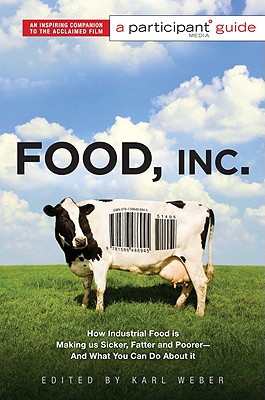
Food, Inc.

I have a crush on Eric Schlosser. I know he's not a movie star or even a farmer but he's got a way of talking about farm workers rights and corn that makes me soft inside. And then when he says, "Monsanto," and his hand flexes into a fist; what can I say?

I'm his.

I didn't read the book but I saw Food, Inc.. Not only does the movie star Eric Schlosser but Michael Pollan was there too. And so was Joel Salatin. They're the three stooges of the know-your-food movement. And I mean that with the utmost respect. These guys were awesome but they're funny too.

The movie was everything a sustainable food girl could want and yet it was just a taste of how food makes its way to the plate. There was a vignette on factory farmed animals, on the treatment of farm workers, of the growing rates of diabetes as a result of cheap food. There was a vignette on GMO's, on government subsidies, on the source of ingredients in food. The movie stayed succinct but could have taken off in any direction for hours. And I would have stayed for all of it.

There were a couple of times I covered my eyes, a couple of times I covered my heart. And a few times my own fist flexed into a fist and I wanted to punch the air and yell, "Yeah. Tell 'em. Way to go!" And then I would get all googley eyed when Eric Schlosser returned to the screen.

The most surprising information was related to the treatment of the migrant farm workers. Forget about how we treat the animals we eat, or the pesticides and fertilizers being flushed into our water ways. Forget about the destruction of top soil and the inability of farmers to save seeds because a patented GMO seed has blown onto their property. Forget about all of that and there are the human beings that handle the food. I wanted to cover my eyes, my heart and ears all at the same time.

The movie is not doom and gloom however. The Stoneyfield Farms guy is one happy dude. And the guys from Walmart? Complete comedic relief. Sure, there are challenges. When hasn't there been? But Food, Inc. is hopeful for the mere fact that it was made. That it's being distributed to major markets. That's it's been reviewed and talked about and linked all over the place.

A friend told me a year and a half ago that the sustainable food movement would never go mainstream. "It's just a trend," this friend said. This movie is not however a trend. It's ambitious, it's smart and hopefully it will whet the appetite for mainstream to start lifting the veil between kitchen tables and food producers everywhere. Hopefully it will raise the momentum of people voting with their forks for fair food that is considerate of all beings.

But mainstream better stay away from Eric Schlosser. He's mine!

Recommended: For people who eat.
Rated: 4 Stars (I don't want to set expectations too high and parts of it are a bit corny!)

Wednesday, May 6, 2009

The Botany of Desire

Having read and thoroughly enjoyed both of Michael Pollan's newer books, The Omnivore's Dilemma and In Defence of Food: An Eater's Manifesto, I was eager to delve into Pollan's past to discover his many other insights into the wonderful world of food. I was not disappointed.

The Botany of Desire is the historical recounting of four plants that for Pollan represent mankind's greatest desires: sweetness, beauty, intoxication, and control. However, rather than use the four corresponding plants (the apple, tulip, cannabis (aka marijuana), and potato) merely as symbols of desire, Pollan takes us on a journey to discover how our desires compliment and compete with those of these four plants on an evolutionary scale; in other words, how we have co-evolved.

How easy to assume that mankind has manipulated nature throughout his history, yet Pollan hypothesizes that these plants have taken their turn in manipulating us throughout the millennia as well. Could it be true that are but a pawn in the evolutionary scheme to spread the seed of living things that have existed far longer than we? Pollan remarks that although we are in awe of the wolf, it is the "domesticated" dog that has it's every need met by man. Have we domesticated the canine, or have they domesticated us?

Perhaps his deepest insight was the idea of perception. Deeming ourselves the grand masters of the universe, we falsely assume we manipulate it at will, choosing for ourselves which forms of life are valuable and which are not. But stepping back into the larger picture, we must ask ourselves if this is fact or simply our perception, which can be greatly misguided as we see but our own egotistical interpretations of what is and is not. How beautiful though that for some 250 pages, we can delve deep into the world we so rarely consider, what Pollan refers to as "the plant's-eye view of the world;" a world that is far more vast, wonderful, and inspiring when we "imagine a very different kind of story about Man and Nature, one that shrinks the distance between the two of us, so that we might again begin to see them for what they are and in spite of everything will always be, which is in this boat together."

Recommended: for the environmental philosopher in all of us.
Rated: 4 out of 5 stars.

Wednesday, March 25, 2009

Ecology of a Cracker Childhood

I dived headfirst into Ecology of a Cracker Childhood by Janisse Ray and barely came up for breath until I finished. It magically combined several of my favorite themes including nature, childhood, ecology, Southern lore and family angst, trees, trees, and more trees.

Ray interweaves the story of her childhood growing up dirt poor amongst her family junkyard. We have the phrase "poor trash" in our society to denote those souls that grow up in our back country rural places, and Ray lived the story on the soil of Georgia as they survived to make it day by day. The interesting thing about the trash - both in human and physical items - is that there are jewels of interest for things that we might normally throw away.

She played school and wrote with chalk on the sides of abandoned automobiles, made a raft of car gas tanks to sail on tree rimmed ponds, and her Daddy could pull a vacuum out of a heap and tinker with it a bit and soon it hummed just right. Pieces of things would have a second life and provide an meager income for a family growing up in the 1970's.

As a naturalist author Ray intersperses her story with information about trees of the South, mostly the longleaf pine. One of my favorite parts of the book describes the birds partial to nesting in the trees of a longleaf pine, and how they like old growth trees the best. The Red Cockaded Woodpecker is a unique little bird that nests in the nooks and cavities of a live pine tree and carves it's nest out year through year. Ray weaves an eloquent chapter on this little bird and incorporates many of the facts about the species in this chapter. She includes tidbits about the threats to the habitat of this breed of Woodpecker, and I found myself captivated by the information. If you investigate the link above you will journey to the Cornell site that tells you more of this interesting little bird.

Incorporated into the book are nuggets that stay with you, such as the commentary on clear cutting forests. She writes, " If you clear a forest, you'd better pray continuously." " God doesn't like a clear cut. It makes his heart turn cold, makes him wince and wonder what went wrong with his creation, and sets him to thinking about what spoils the child. You'd better be pretty sure that the cut is absolutely necessary and be at peace with it, so you can explain it to God, for it's fairly certain he's going to question your motives........" And she goes on to describe clear cutting, the impact, and the effects on the diversity of the forest with replanting.

Her novel (slash) non-fiction (slash) autobiography is almost a snapshot of many of my experiences in the South. Her descriptions of her grandmother mirror my own Grandmaw in many ways that I was startled. The food, the cooking, the heart of a Southern woman are captured in her descriptions of family and relatives. Add a dash of mental illness in the family history and it makes for a mighty interesting story.

The book won the American Book Award, the Southern Book Critics Circle Award, and the Southern Environmental Law Center Award for Outstanding Writing on the Southern environment. It was also chosen for the "All Georgia Reading the Same Book" project by the Georgia Center for the Book. (info from Wiki) Ray went forward beyond her junkyard childhood to become a noted author, naturalist and environmental writer. Her works have been published in Audubon, she is a known environmental activist and has been featured on NPR.

I'm quite intrigued to discover an author that blends many of my favorite elements together so well while prompting me to learn more, to go further, to dive deeper into the environment around me. She blends her facts and narrative elements together so well that I feel she would be a wonderful author for our Green readers to explore - and the combination of a book non-fiction readers will enjoy while satisfying the desire for just a good 'ole read adds up to a 5 out of 5 stars on my tally sheet.


Wednesday, March 11, 2009

Book Review: Finding Beauty In A Broken World

This is the first book I've read by Terry Tempest Williams although I've heard her name in the distance for years. And the truth is I set the book down after the first 35 pages and it was only by chance I picked it up after two weeks and began again. The second time I barely set it down until I turned the last page though.

Finding Beauty opens with TTW's experience with making mosaic in Italy, the metaphor of which is carried through the remainder of the book. I could have done without this part but the art ties the remaining two seemingly disparate sections of the book together.

The first half, after the opening, is about prairie dogs. Yeah, I know. Prairie dogs. I saw one once and have never given them another thought. Given their shrinking numbers I'll likely never see one again either. And I was fascinated with them.

TTW spends two weeks with a leading prairie dog researcher in the Utah desert observing the dogs 14 hours a day. Her observations are all over the map. They're part memoir, part poetry, part educational, humor, despair, part hope. I fell in love with prairie dogs. They live in communities, communally nurse the young and are brilliant in their contribution to the natural landscape. And they have language. It's amazing.

The second half of the book is about the author's experience in Rwanda with a group of artists building a memorial in a survivors town. It's a world away from the Utah desert but TTW ties it in with the mosaic metaphor. I appreciated reading the ways in which the Rwanda people are healing. And it was hard to read what individual people went through, are still going through. But there's beauty; the never ending beauty of spirit, of community, of courage and renewal. A miracle really.

I not only learned about prairie dogs and the people of Rwanda from reading this book but it reminded me to look for beauty in the broken places too. My only disappointment is I can't read it for the first time again.

I recommend this book to all people. It's our story regardless of landscape or borders.
I rate it 4.5 stars only because the beginning nearly kept me from the remaining beautiful stories.

Thursday, November 27, 2008

Hoot by Carl Hiaasen


Fans of enviro themed fiction will enjoy Carl Hiaasen's Hoot, a chapter book styled for your juvenile reader. Roy is a middle schooler that recently relocated to Florida from Montana, a move that left him missing mountains and woods. He develops a new circle of friends including one tough chick named Beatrice and a mysterious running boy.


Roy discovers tiny land burrowing owls will soon have their habitat threatened by a stack of flapjacks, AKA Mother Paula's Pancake House. We follow Roy through an ecological mystery as he works to save the tiny homes of the owls and convinces us to give a hoot. It is a rough go as he works against adult conspiracy, apathy and a twist of legalistics that could drive most growns ups nuts.

I'm thankful for writers that are exploring contemporary themes of conservation, justice and sustainability as they mesh real world plots and characters for a read that grips us. This is a book that I've often recommended to parent and child to read together, and even more exciting if you piggyback other non-fiction materials to study upon while you progress through the novel.

If you like Hoot, try Flush, another ecological mystery book Hiaasen writes with the same sense of style and humor for kids. Hoot has indeed been made into a film version, a fun followup you may enjoy after working through the book.

Thursday, November 20, 2008

Book Review: How to Grow Fresh Air

I didn't really intend this to be "how to avoid toxins week," that's just what seems to be on everybody's mind! Anyway, this review comes to us from Joyce from tallgrassworship and I think it follows nicely after Joce's review of "The Body Toxic." Thanks for showing us a pleasant way to help solve a problem, Joyce. I might just have to get over my habit of murdering every house plant I grow!

As much as I love houseplants for their beauty, and the homeyness I think they lend to any room, there is another good reason to have them. In his book "How To Grow Fresh Air", Dr. B. C. Wolverton synthesizes 25 years of research on indoor air quality, and explains how we can prevent Sick Building Syndrome, which can cause allergic and respiratory problems. Since most Americans spend about 95% of their time indoors, this is very important information.

Wolverton worked for NASA, teaming with others to find ways to keep air breathable in space stations, and potentially in sealed modular housing that could be used to inhabit other planets. They studied what chemicals building materials, furniture, and appliances and electronics off-gas into the indoor atmosphere, and which plants most effectively remove certain gasses and toxins.

I appreciated the careful explanation of what chemicals are present in our buildings, and what effect they have on our health. Wolverton is able to make this information accessible to some one like me, who does not have a strong background in chemistry. He gives a clear review of the process of plant respiration.

After you learn all this information, there is a good chapter on caring for the plants. Then, most helpful of all, is an extensive list of plants to choose from, with photos, care information, and an explanation of which chemicals that particular plant is good at removing from the environment. For instance, some plants are very useful used in close proximity to computer equipment, some are especially good in bedrooms, since they do more of their breathing at night, when you are sleeping there, and so on.


I loved this book for it's readability, accessible research, and the way it broadened my understanding of the symbiotic relationship we have with the plant kingdom. If you are new to the houseplant world, you should be able to get off to a good start with the growing information. If you are an old hand at it, you will still learn plenty of interest to you. If you are interested in environmental issues, and how to live in a less toxic space, this book would definitely be of use to you, as well.

I would give this book 5 out of 5 stars.

Sunday, November 2, 2008

Vital Signs 2007-2008


I found a fantastic little handbook that takes the pulse of our globe in only 166 pages if you read the notes and bibliography. Vital Signs 2007-2008 from the WorldWatch Institute provides a clear overview of an extensive range of scientific data on key indicators across our planet. The bibliography of scientific studies stretches for 35 pages with every indicator studies backed up by cold, hard facts.

The introduction provides a profound quote from Utah Phillips, an American Labor organizer and folk singer. He said: "The earth is not dying. It is being killed, and the people killing it have names and addresses." Vital signs goes on to say, and to prove that the planet is not dying, but "ecological systems are. And the names of people killing them include political leaders, corporate executives, and millions of ordinary people who are part of an unsustainable consumer economy." (p. 9)

Vital Signs tracks a variety of key indicators for global health. I"m shamelessly pulled this from their web site as they document it nicely:

Food and Agriculture Trends
Grain Production Falls and Prices Surge
Soybean Demand Continues to Drive Production
Meat Output and Consumption Grow
Seafood Increasingly Popular and Scarce
Irrigated Area Stays Stable

Energy and Climate Trends
Fossil Fuel Use Up Again
Nuclear Power Virtually Unchanged
Wind Power Still Soaring
Solar Power Shining Bright
Biofuel Flows Surge
Carbon Emissions Continue Unrelenting Rise
Weather-related Disasters Climb
Ozone Layer Stabilizing But Not Recovered

Social and Economic Trends
Population Rise Slows But Continues
World is Soon Half Urban
Economy and Strain on Environment Both Grow
Steel Production Soars
Aluminum Production Continues Upward
Gold Mining Output Drops Slightly
Roundwood Production Up

Transportation and Communications Trends
Vehicle Production Rises Sharply
Bicycle Production Up Slightly
Air Travel Reaches New Heights
Cell Phones Widely Used, Internet Growth Slows

Conflict and Peace Trends
Number of Violent Conflicts Steady
Peacekeeping Expenditures Hit New Record
Nuclear Weapons Treaty Eroding

Food and Agriculture Features
Agribusinesses Consolidate Power
Egg Production Doubles Since 1990
Avian Flu Spreads

Environment Features
Climate Change Affects Terrestrial Biodiversity
Threats to Species Accelerate
Invasive Species Drive Biodiversity Loss
Ocean Pollution Worsens and Spreads
Bottled Water Consumption Jumps
Sustainable Communities Become More Popular

Social and Economic Features
Progress Toward the MDGs Is Mixed
Literacy Improves Worldwide
Child Labor Harms Many Young Lives
Informal Economy Thrives in Cities
Socially Responsible Investment Grows Rapidly

Health Features
HIV/AIDS Continues Worldwide Climb
Malaria Remains a Threat
Male Reproductive Health Declines

This little handbook isn't necessarily uplifting, but it provides me with clear data to incorporate in my own research and writing. It also dispels many of the willy-nilly statements I hear about skewed data and/or cyclical cycles. (And there are some, but it doesn't account for everything that we see in our systems). I also loved the charts, graphs and photographs that capture the data in a very usable manner.

Vital
Signs also provides for narrative facts that are useful and intriguing. For example, the Inuits in the Arctic are now using air conditioners for the very first time. (p. 42) Fishing employs 38 million people worldwide, and as many species are farmed out and our oceans are polluted we have vast economic and job related issues to consider as well as a concern about food source. (p. 26) The portion of adults in the world that have basic reading and writing skills is now up to 82% (p. 110) and I say hooray to that.

I know it isn't a book of joy for the most part, but it is a book of clarity in data and issues. As a lover of facts and figures from time to time I found it an interesting though eye opening read. If you are a lover of data and part of a Green-centric movement, then this may be a valuable resource for you.

Tuesday, October 28, 2008

From The Bottom Up


If you are looking for inspiration, look no further than From the Bottom Up: One Man’s Crusade to Clean America’s Rivers. The book grabbed me from the beginning with the introduction and brief synopsis, but even moreso when Chad shared his parent’s simple philosophy that was taught to him. That “you can improve the world by persistent endeavor.”

The translation of ideals into action is a theme that follows the book throughout the pages. His one simple mission, to clean up the shores of his beloved Mississippi River and recycle the trash began with just his two hands and grew into a full fledged non-profit. His organization, Living Lands and Waters is still going strong with other environmental projects under its wing such as the Million Tree Project, environmental workshops, and cleanup events.

Chad grew up on the Mississippi, just a mere 67 feet from it in East Moline, Illinois. His back yard and playground became part of his spirit and soul, a connection that later brought about a deep desire to heal the shoreline. He was always a bit of a doer, given the charge to clean up shoreline seaweed at just age 10. This motivation later translated into action followed by awards, even one such as the Jefferson Award for public service shared by the likes of Bill and Melinda Gates.

The story is very readable, and flows well through the entirety. It is full of humor, stories, and many a fact and figure. I enjoyed the additional pictures that provided a depth to the events. Most importantly, I found it inspiring because I see myself and each of us in the pages of this book. One of my favorite Gandhi quotes, “You must be the change that you want to see in the world,” was on my mind at many points of this book. We can all be part of the changes that we need on every level be them big or small.

No, his path was not always easy. In the beginning he was one person grunting and struggling to remove pieces and parts of our debris out of waters that he considers home. His sponsorship began with one small corporation willing to give, and grew bit by bit. His story grew as more people heard and relayed the message. He has removed refrigerators, bowling balls and even a horse head from the shores to leave a cleaner and safer place for humans and wildlife.

His looks and charm have been compared to movie star status, but his path lends itself to a modern day folk hero for the rest of us. I think it is a story worth reading, and a mission worth being inspired about.

Rated 5 out of 5 for all readers.

Wednesday, August 20, 2008

Lost Mountain - Multiple Reviews

Lost Mountain - A Year In the Vanishing Wilderness, Radical Strip Mining and the Devastation of Appalachia by Erik Reece, forward by Wendell Berry has been beautifully reviewed by Bookwormers before me. Lake Loop's review inspired me to order the book from the library. And she inspired Donna at Chocolate Crayons who wrote her review here. Green Bean at Green Bean Dreams wrote her review here.

Lost Mountain should be on bestseller lists across the country. I loved it; but it's not sexy. At all. Animal Vegetable Miracle had turkey sex, Omnivore's Dilemma must have had corn sex. I can't remember. Lost Mountain has heart.

Erik Reece cares about the mountain and the people that are being devastated by mountain top removal. He rides in their trucks and sits at their dinner tables between his monthly hikes up the mountain to journal it's demise. He listens to their stories, gives them a voice. He tells their history and it's impossible to not embrace them. They are good people. Even when they are also working at the mines.

There are no easy answers anywhere. The laws are too lax to help and they're ignored anyway. If there's too much noise the regulating agencies broaden the restrictions. Legal becomes criminal. It's eye opening stuff.

My favorite parts were when the communities came together to protect or reclaim the land. An 80 year old coffin maker took up his 22 rifle to protect his stepson's land (his stepson was a Marine serving in Iraq at the time). He was jailed and his neighbors surrounded the property for him; 22's in hand until he was released.

They came together again to pray on the top of a removed mountain top. They held hands, planted seeds of wildflowers. A couple journalists attended although strip mining is one of the most under reported environmental concerns of our time.

And young and old alike came together for a piece of performance art to reenact a visit forty years prior by Robert Kennedy four months before he was shot. The problems that existed then continue today.

I wish I could say the book ended happily. The author tried but his conclusion chapter was unnecessary. Coal mining is a problem however you spin it. And so is corruption, greed and our addiction to cheap energy. We're grown ups. We can take it.

Since reading Lost Mountain I turn out the lights more, I'm investigating carbon offsets through our energy provider. And I talk about coal mining and the good book I read about it. I believe the more people know what's going on the better chance we may have to finding solutions.

Check it out.

Rated: 5 out of 5

Recommended for everyone who has ever turned on a light.

Wednesday, August 13, 2008

Lost Mountain: A 2nd Opinion

Several weeks ago, berrybird wrote a review of "Lost Mountain" that was so good, I don't have much to add. Only that, in answer to my comment expressing reluctance to read the book because it's so much easier not knowing, berrybird replied that, if it helped, the book was beautifully written. I went ahead and read it and I'm really glad I did. So here's my second opinion...

"Lost Mountain" by Erik Reece is the story of, well, a mountain in Kentucky that has been lost. It would be one thing if the mountain went hiking one day and didn’t return when predicted, but no, Humpty Dumpty was pushed.

Seriously, "Lost Mountain" is the story of how Appalachian mountains are being summarily removed by blasting and bulldozer in the name of cheap coal. Author Erik Reece spent a year watching one mountain disappear. Each month he went back, chronicled the newest developments and photographed them. In between visits, he went out into the countryside and learned the stories of people who live there and the devastating effects that "mountaintop removal" has had on their lives and their communities. In short, the coal companies come to town, remove the mountain to extract the coal, fill the nearest valley and stream with toxic remains, and then leave town. Rules are ignored, regulations aren’t enforced, there’s bullying worthy of the mob and if someone actually tries to make the company pay, they just declare bankruptcy and move on to another mountain under another name. It’s corporate greed at its ugliest, and it’s tragic. The worst part is that it’s not even necessary to remove the mountains to get to the coal – it’s just cheaper.

I thought Reece did an incredible job as an investigative reporter and the book is well written and easy to read. The weakest part is the conclusion where he tries to end the book with hope. It’s going to take a lot more than pretty poetry to solve this problem. I think that as oil becomes more expensive, national attention is going to turn towards coal. I hear politicians talk about "clean coal technology," but it’s an illusion at the power plant because it doesn’t take into consideration the means of extraction. Coal may even be seen as a way to make more oil (did you know you can make oil from coal??) and we need to know the real cost. In the meantime, isn’t there somebody on Capitol Hill who can force the coal companies to obey the rules??!
Rating: 4 out of 5 stars. Readers: Light green to medium dark green.

Tuesday, July 8, 2008

Book Review: Lost Mountain

To keep things interesting, The Blogging Bookworm will, from time to time, highlight reviews from fellow bookworms. This review is from berrybird at Lake Loop. I chose the review because one, it reached out and grabbed me and two, I know nothing about coal but had heard in the distance the echoes of strip mining and it's devastation. This book is that voice, no longer an echo. Check it out and enjoy the review.The subtitle pretty much says it all: A Year in the Vanishing Wilderness; Radical Strip Mining and the Devastation of Appalachia. This is a terrible and wonderful book, simultaneously fascinating and horribly guilt inducing, one of the most depressing books I have ever read. It is well written and fast paced, a nightmare of outrageous proportions. Everyone should read this book.

In September 2003, Erik Reece hiked the ironically named Lost Mountain, shortly after the state of Kentucky issued a permit for its destruction, but before the miners showed up. He documented the natural beauty: the sassafras, the warblers, the liverworts. For the next year, he returned to Lost Mountain repeatedly, trespassing at no small personal risk, to document the unnatural horrors of strip mining, and the changes wrought upon the lands and waters. The meat of the book is organized in monthly sections, where the author chronicles his ongoing observations. The frontispiece to each section is the same, a photograph taken before Lost Mountain was mined, showing misty mountain wilderness. When you turn the page to begin each new section, you are confronted with an image taken that month, showing the changes. Before, after; before, after; each successive "after" is more and more horrifying.

Interspersed amongst the observations of natural destruction, Erik Reece documents the human side of this tragedy, the social ramifications Big Coal has on rural communities. He attends public meetings, and visits local educators, clergy, and families. A local activist takes him on a disturbing tour of her town, pointing out home after home where, "everyone in that house died of cancer."

He also speaks with state regulators and representatives from the coal industry, and sheds some light on the politics of coal. It is a dirty, bloody business. Corruption and cronyism seem to rule Kentucky. There might be environmental protection laws on the books, but there is no enforcement. Regulators who try to do their jobs are forced out of office, or worse. In December 2003, on the same day the author sneaks past the iron gates on Lost Mountain for one of many documentary hikes, a state surface mine inspector died after being found beaten and unconscious in his own home, his body mutilated by human bite marks. Big Coal does not take kindly to resistance.

This may not be a pleasant book, but it is necessary. We need to educate ourselves about where our energy comes from, so we can demand better. As I suspected, "clean coal" is not the answer. Not that coal mining can't be done in a more responsible, more ethical way; it can, and the author documents that as well, describing the methods and practices that don't poison the water, where native plants will grow again. It can be done, but it is not.

This leads me to my only small quibble with the book. There is a conclusion section at the end, which contain some great information and tries to provide hope--this is where the author describes reclamation done right. In my opinion, it is still the weakest chapter in the book. To be perfectly honest, I don't like the conclusion chapter because Erik Reece uses it to take what I see as a cheap shot at science. It's that same old, tired humanities vs. science argument, "Science without compassion, science without ethics, has given us the modern war machine, the industrial farm, the dead zone in the Gulf of Mexico, the strip mine." Dude... oversimplify much? It's not science that gave us those things, it is greed, it is the market, it is simple ignorance.

I accept my share of the blame: I am ignorant and I am complicit. Due to an abundance of hydropower and nuclear power, only 18% of the electricity in my state comes from coal. But I use electricity, and my utility buys coal. In reading this book, I became a little less ignorant, and a lot more motivated.

Back at our old apartment, we paid a little extra for green power, a mix of wind energy and small hydro. When we bought this house, it was one of the details that got lost in the shuffle of moving, and we ended up with the default conventional power. Reading Lost Mountain inspired me to pull out the utility bill hanging file, and re-enroll in green power. It will cost a few extra pennies per kilowatt, but it will ease my conscious, make me feel less complicit. I no longer support Big Coal.

RATING: 5 out of 5 Stars

READERS: Recommended for all greens in the spectrum and everyone in the entire color wheel