Showing posts with label food. Show all posts

Friday, November 27, 2009

The Way We Eat: Why our Food Choices Matter

There's just no beating around the bush with this one. The Way We Eat: Why our Food Choices Matter (2006) by Peter Singer an Jim Mason is an intensive look at the ethics of eating, something that seems almost lost in our modern Western culture, but that is gaining ground once again.

Singer and Mason explore every last nook and cranny of our food system from factory farming to the organics and local food movements, to vegetarian and vegan lifestyles, even into dumpster diving and obesity - all far deeper than even Pollan dares to tread. Because contrary to what we'd love to believe about food, it's not just about what we do to our own bodies. Our food choices affect the rest of the world around us, far beyond what we could ever imagine.

The authors have done extensive research, but the best part is that they come at each ethical question as a non-believer, asking tough questions; but more importantly, demanding that you take the information, analyze it, and decide for yourself where your ethical lines are drawn.
When we buy food we are taking part in a vast global industry. Americans spend more than a trillion dollars on food every year. That's more than double what they spend on motor vehicles, and also more than double what the government spends on defense. We are all consumers of food, and we are all affected by some degree by the pollution that the food industry produces. In addition to its impact on over six billion humans, the food industry also directly affects more than fifty billion nonhuman land animals a year. For many of them it controls almost every aspect of their lives... Through the chemicals and hormones it puts into the rivers and seas and the spread of diseases like avian influenza, agriculture indirectly affects all living creatures. All of this happens because of our choices about what we eat. We can make better choices. [emphasis mine]
Whether you're a meat eater, a devoted organic foodie, a locavore, a vegetarian/vegan, or simply a conscientious consumer, this book will challenge what you believe about food. Put plainly, this is not an easy book to read. There were times I felt sick about the treatment of animals and farm workers; there were times I felt defensive, particularly of the local food movement; and at other times, to be honest, I felt the need to reform some of my views on ethical food choices.

Again, it's not a quick and easy read, but it's a must read for anyone looking to live a more mindful life.
Rated: 5 out of 5 stars
Recommended: Do you eat? You need to read this book!

Friday, November 6, 2009

Food Matters: A Guide to Conscious Eating

When a friend mentioned that Mark Bittman's new book had made it to our local library stacks, I immediately added my name to the queue. Food Matters: A Guide to Conscious Eating is an easy-to-read, well-written guide to eating for the benefit of our health AND the environment; far from mutually exclusive, he argues.

Bittman's writing style reminds me of what would happen if food advocates Michael Pollan and Marion Nestle got together to write a book. Food Matters presents eating in a way we can all understand: more plants, fewer animals, and as little highly processed food as possible, combined with advice on navigating your market in spite of confusing health claims on food packaging. Sounds easy, so what's the catch?

Absolutely nothing! Bittman explains this "diet" is meant to be long-term; one that relies on common sense, not confusing (and often conflicting) scientific studies or national food guide pyramids designed to make "Big Food" industries fat and happy. Best of all, Bittman gives you his own story, only to tell you to do what works for you. There's no one, single way about it.

The key is to exercise what he calls "Sane Eating." Eat lots of plant-based foods - LOTS. But most importantly, enjoy food! Don't eliminate anything entirely. For instance, have some cake - just limit it to rare occasions or have a much smaller piece.
This is not about deprevation or ironclad rules, but about being sensible.
In the end, not only is this better for our health, but it's better for our pocketbooks and the environment too! In other words, eat as though "food matters" - because we have an amazing amount of power as individuals over our health and even global warming. In fact, studies show our food choices make more of an impact than our driving choices.
[E]ach time you make a decision to support an alternative to the industrial meat complex, you're rejecting that type of agriculture in favor of something far better for the planet, and for you.
After explaining the whys and hows of "eating as though food matters," Bittman offers us Part II, which includes tips on saving time in the kitchen, tips on eating out, a list of items to keep stocked in your pantry, examples of dynamic meal plans, and recipes that range from simple dishes and snacks to more elaborate (though easy to fix) meals.

And to further whet your appetite, here are a couple of the recipes I'll be trying:
Nut-Wich: Lightly mash something delicious, smear it on toasted bread, then sprinkle chopped nuts on it. Some excellent combos: banana, honey, and almonds; avocado and peanuts... (page 198)

Vegetable Spread: Baba ghanoush, the classic middle-eastern eggplant dip, is the model for this dish. However, I've turned the procedure into a master recipe that applies to nearly any vegetable... (page 222)
Convinced? Check out Mark Bittman's Food Matters: A Guide to Conscious Eating today and discover the ease of eating for two: you and Mother Earth.

Rating: 5 out of 5
Recommended: for newbies to the sustainable food realm or those wanting to be re-inspired

Sunday, November 1, 2009

Appetite for Profit


Appetite for Profit: How the Food Industry Undermines our Health and How to Fight Back by Michelle Simon is a book that explores social, economic, political and health related topics of the United States food industry. Published in 2006 it exposes many of the issues of Big Food that we've seen in the other likes of Big Pharma or Big Tobacco in that there is an element of government involvement that runs counterproductive to the health and sustainability of our planet and citizenry.

In 2006 Simon writes that the processed food industry is a $500-billion-a-year money motor that has a great deal more cogs in the wheel then we realize. Specific examples include the MyPyramid nutritional guidelines that are heavily influenced by corporations, nutritional information manipulated and distributed by the industry itself (think nutritional discussion on a cereal box) and nutriwashing processed foods so that consumers think that they may be healthy.

Of particular interest to me was the chapter on attempts to regulate junk food marketing to children. Topics such as the "nag factor" for children, the extend of commercial free speech under First Amendment law and how parents can fight the tide were points of key discussion. In 2005 specific large giant food industries formed the Alliance for American Advertising in an effort to protect their right to market specifically to children. The absolute free speech right to market to children is a topic that has many layers - do companies have the right to nutriwash, nicktritional, and use captive audiences as in children in schools? Spongebob Pop-Tart or Spiderman Macaroni anyone?

Simon's book is a bit harsh, abrasive in facts, and clear political call to action that we are responding to in ever increasing numbers in 2009. If you've been interested in topics of food in relation to our health and sustainability, Appetite is a clear and easy to approach start to learn about the topics.

Friday, October 16, 2009

Righteous Porkchop

The first time I heard anyone talk about industrial pig factories it was Robert F. Kennedy, Jr. What he described was so unfathomable I reasoned it must not be true or he was exaggerating. Or something. The speech was likely made at the same time the author of Righteous Porkchop, Nicolette Hahn Niman, worked for Kennedy at Waterkeeper Alliance as a staff attorney and head of a national campaign to combat pig factories.

Maybe I haven't been paying attention between the time of that speech half a dozen years ago and two weeks ago when I picked up Righteous Porkchop. I thought the pork industry had cleaned up its, please excuse me, cleaned up its shit for all I heard about it.

They haven't.

Righteous Pork may change that. NHN spends the first half of the book describing her work with the pig factories and the people and communities who worked alongside her. Which is why I didn't want to put the book down. It's not all pretty reading but the people and communities affected by the factories are.

In some ways the story is an unfolding drama. I found myself more than once, okay, a lot, routing for the local communities but NHN also shows the corner the factory owners have gotten themselves into and I couldn't help but route for them too; that they could find a way out. No one is having a good time.

There's a little bit of spying; quite a few bad politicians. There's a guy hired by the pork industry to tail NHN to community meetings. Eventually someone does have a good time and there's romance too.

The later part of the book visits industrial chicken and fish, factory dairies and beef. Did you know that it's a widespread practice to feed factory hens red dye to make the yolks of their eggs yellow? I had no idea. I also learned the correct terminology for the animals on a dairy. They are not all cows.

There's a lot to learn from Righteous Porkchop. It's a smart book with history.

My only criticism is Niman Ranch beef comes across too precious in Niman's telling. In one example she praises a retailer for carrying Niman beef, overlooking the foreign imports in their produce department. That would have been fine but she goes on to knock the produce department of another retailer that doesn't carry Niman beef.

And I loved this book. It's an important read revealing the truth that corporate meat producers don't want us to know. It's to their benefit to keep us ignorant. Righteous Porkchop's changes that though, one knowledgeable page at a time.

Rated: Four and a half stars.
Recommended: For everyone; vegetarian and meat eaters alike.

Friday, October 9, 2009

Diet for a Small Planet

I first became aware of Diet for a Small Planet by Frances Moore Lappé when it was referenced in Samuel Fromartz's Organic Inc.: Natural Foods and How they Grow. It turns out, Diet for a Small Planet is an almost 40 year-old look at the connection between world hunger and how we eat; and, more importantly, what we can do about it. It has also, I found out, been updated in a 20th Anniversary Edition, which is the one I picked up at our local library.

Lappé begins by walking us through her personal journey into third world countries as she sought to get to the bottom of world hunger. She finds that it is not, as many think, a shortage of food, but rather the imbalance of power between people and a wealthy few (whether government or corporation). A trend, she notes, that she sees more and more in the United States as only a few corporations monopolize the entire food system.
[W]e can see where this blind production imperative has taken us - away from values that Americans have always associated with democracy, and toward a "landed aristocracy"; away from dispersed control over land, and toward a highly concentrated pattern of control; away from a system rewarding hard work and good management, and toward one rewarding size and wealth alone. As I suggested earlier, ours is becoming the kind of farm economy that I have see at the root of so much injustice and misery in the third world."
The book can then be divided into three themes, the problems with food currently gracing our supermarket shelves, what we can do about it, and a near 150 pages of recipes to inspire change in your own diet.

Problems with our food infrastructure and diet

First thing's first. We can't change our food habits if we don't know what's wrong. Interestingly enough, much of what Lappé discusses are food infrastructure pitfalls in 1971 is still true today. First, she delves extensively into how the cheap cost of meat and processed foods mask the true cost of goods (ground water depletion, soil erosion, government subsidies, etc) and how grains are fed to animals instead of a hungry population (so that it can be sold for more money to wealthier populations). And second, that there have been dangerous changes to the US Diet that make it unhealthy for our bodies, the environment, and the world. Check this out...
  1. Protein from animals instead of plants
  2. More fat
  3. Too much sugar
  4. Too much salt
  5. Too little fiber
  6. Too much alcohol
  7. More additives, antibiotic residues, and pesticides
  8. Too many calories
Wait, just sec. Yep, originally written in 1971. Any of this sounding familiar?

What we can do about it

But as is so often the case, the question really comes down to, what can I do about it? And here's what I loved most about this book: Lappé believes in the power of the individual to change the world.
[H]ow can we take responsibility for the future unless we can make choices now that take us, personally, off the destructive path that has been set for us by our forebears.
We don't have to be anyone special, she tell us. We just need to use the talents we have to make changes in our lives and in our communities. Change is happening, she says, "we don't have to start the train moving. It is moving! Our struggle is to figure out how to board that train, bringing on board all the creative energy we can muster."

If you are reading this blog, chances are you are already on this train. The trick, though, is that to continue our journey, we must be ever vigilant, learning each and every step of the way. She reinforces this as she advocates not a vegetarian diet (which is what I would have expected), but rather one of mindful awareness.
[F]reedom is not the capacity to do whatever we please; freedom is the capacity to make intelligent choices. And that is what this book is all about - gaining the knowledge we need to make choices based upon awareness of the consequences of those choices.
May you read and be inspired.

Recommended: to those interested in world food infrastructures as well as how our diets affect our bodies and the world around us
Rating: 3 of 5 stars

Thursday, October 8, 2009

Organic Inc: Natural Foods and How They Grew

Having spent the summer reading books that have fueled my private meditation sessions, I decided a nice eco-read was in order for the next review. And, really, how can you go wrong with a title like Organic Inc.?

Samuel Fromartz's Organic Inc: Natural Foods and How They Grew (Harcourt Books, 2006) is a look into the history, and in fact evolution, of organics in the United States. Why? Fromartz, a dedicated Whole Foods shopper and buyer of organics was fascinated by the movement and curious as to its roots. A business writer by trade, Fromartz travelled the country meeting with industry leaders, historians, and farmers to discover the true roots of the organic movement.

What he discovered is that although organics began with growers, dedicated to the nourishment of body and Earth, the movement quickly became a big-business sensation where large companies like Archer Daniels Midland, Coco-Cola, ConAgra, General Mills, Kraft and others own the bulk of the organic market.
For the path that agrarian idealists had taken in the 1970s - to farm in concert with nature and sell organic food outside the dominant food system - became compromised by its success. Organic food had become too popular to remain in a backwoods niche, morphing into yet another food industry profit center.
The result has pitted industry vs. small farmer in the creation of government regulation. Purists want organics to be focused on fresh, whole foods, but industry needs processed food to maximize profits. The battle continues today with standards continuously under attack. Can heavily processed foods truly be called organic or does that defy the intention of the organic movement?

In the meantime, organic regulations change seemingly to whim - at times allowing any number of synthetic ingredients, wavering over the definition of "access to pasture" (for the meat and dairy industries), and are compromised when companies are repeatedly caught fraudulently packing conventional produce in organic packaging. What's a consumer to believe? How are we to make educated choices?

As for the book itself, it was an interesting read, though I almost gave up in Chapter 4, a 40 page section dedicated to Spring Mix. Maybe it was me, but I had a hard time staying focused. The faithful reader's perseverance will pay off however, as Fromartz lays out the politics of organics in the last half of the book, leaving it up to us, the reader, to decide: What should organic mean?
Recommended: to those interested in the history and politics of the organics movement
Rating: 3 of 5 stars

Sunday, September 20, 2009

No Impact Man - The Movie

It's been a long time since I've cried at a movie. But that's exactly what I did last night watching the new documentary, No Impact Man. Not crying really but weeping, appreciation and laughing tears. I fell in love with the whole family it's about; Colin, Michelle and Isabella.

While I was aware from news bites that there was a guy in NY that had given up everything (I never considered what he was gaining) I didn't read his blog or follow. Then Beth at Fake Plastic Fish had an interview post with the guy, Colin, which had me take notice. After that the Green Phone Booth posted a review of his book. I was interested.

I went to the movie with a friend who has never carried a canvas bag; not unlike Colin's wife, Michelle. While I learned new low impact tips from him I was his choir in the audience. More importantly, Michelle related to the audience that had yet to hear the siren's green call. Her distaste for worms, choice words for bike riders; her melt down at giving up caffeine. She spoke from the beauticians chair getting her hair colored and from her air conditioned office at Business Week sucking on ice. And then she cooked her first dinner. We were all changed.

On the way out of the theater my friend asked, "Do you think the growers would refill the plastic shells I buy berries in if I return them to the store?"

I tried not to cry again.

The big ahhh factor is their daughter, Isabella. She was a mimicking sprite; as happy in the dark as she was in the garden.

Admittedly I was biased toward the documentary from the beginning as Colin shopped for local food with flour sack towels and cloth produce bags. He spoke all my favorite things about sourcing food from near by. But he didn't overload our plates with food. He moved on to transportation, household cleaning products, cosmetics; the source of our power. He polished himself up for politics, volunteering, for talking to audiences. And while people were watching him, he was listening to the people doing the watching. Which is where he earned my final respect. He didn't flinch at the truth of criticism but neither did he give up in the face of it.

I'll likely read the book, but the movie was instant gratification, a night out; it was entertainment and inspiration. I give it a five out of five stars and recommend it to any audience. It's a love story, a comedy, drama and adventure. And strange enough to the way most of us live to nearly be considered sci fi.

I'd love to know how the movie impacts you if you have a chance to see it ( here's the schedule). And take a friend. They'll thank you.

Monday, September 14, 2009

Monday Roundup

My hairdresser said, Mercury is in retrograde. Communications may be skewed." I'm sure that explains the reason I can't make it all the way through a book lately.

I started Blue Gold, The Battle Against Corporate Theft of the World's Water. Very interesting. Depressing. I lost all hope for future civilizations. For some reason I never considered all the water we'll ever on the planet is already here. I thought God renewed it every few years. Or something. It's embarrassing. I returned the book to the library.

Next I checked out Eugenia Bone's book, Well Preserved, Recipes and Techniques for Putting Up Small Batches of Seasonal Food. Nice pictures. The recipes were mostly not food I would eat though. Fresh asparagus and squash blossoms are great; but canned? I did however make two of her recipes from the newspaper; brandied peaches (I used rum) and poached pears. Not my usual fare but they were easy to make. And good. The asparagus are probably good too. I returned the book the next day.

Two weeks later I'm 36 pages into Cheap, The High Cost of Discount Culture. So far it's about the history of retail. I'm sticking with it. I read a mean spirited review of it in an LA newspaper that stunned me. The writer justified the destruction that went along with cheap, claimed it as our American right to pay less. I lost all hope for future civilizations. Again.

My lapses in hope are short lived however. The fact that authors devote their time to study, research and lifting the veil on the myths that surround us is cause for hope. Regardless of how the planets are aligned.

Have you read anything hopeful? Helpful? Despairing? Let us know.

Friday, September 11, 2009

Growing Good Things to Eat in Texas

Growing Good Things to Eat in Texas (Texas A&M University Press, 2009) is more than a stunning pictorial of the vast and varied farmlands of Texas. It's an opportunity to experience farming the way nature intended. Author Pamela Walker brings readers along for the ride as she travels the great state of Texas, profiling 10 organic farms in their efforts to live and work in step with nature rather than in spite of it as has become typical of modern commercial farming.

These 10 farms, whose products range from fruits and vegetables, to shrimp and meat, and finally to dairy, are merely examples of the extensive efforts being done around the state to farm sustainably. More importantly, they are proof that not only is organic farming better for man and earth, it's also profitable.

Walker, will the help of photographer Linda Walsh, takes you inside the operations of each location where readers meet the family, discover what first attracted them to organic farming (certified or not), and experience the triumphs and challenges of growing organically in Texas.

But like reading Joel Salatin, popular sustainable farming author and owner of Polyface Farms in Virginia, these 10 entrepreneurs are far from the exceptions to the rule. They are meant to be a beacon of hope that sustainable farming is alive and well; that it is meeting the demand of a growing community of mindful consumers; and that real people like you and me are making a difference today, right now.

Whether or not you call Texas your home, Growing Good Things to Eat in Texas is a must read. Both farmer and consumer will find the future of farming within its pages. It is this future towards which each and every one of us must strive, supporting sustainable farming one forkful at a time.

Saturday, August 15, 2009

A Nation of Farmers

Before I began blogging, I lurked at other people's blogs. I roamed the green blogosphere and soaked up everything I could on Climate Change, mass extinctions, Peak Oil, and such. One of my favorite blogs to hang out was at Sharon Astyk's Casaubon's Book.

At that time, Sharon had not yet become a published author. Then, she was just a prolific blogger. Very prolific. Every other day or so, she wrote a long tome about Peak Oil, living on a farm, low energy living and all other kinds of topics that made me think but even more made my stomach hurt. And, while I thought Sharon was probably right when she intimated that "this is the end of the world as we know it", I got tired of walking around with a burgeoning ulcer and a overheated heartbeat.

I quit reading Casaubon's Book (though I do take a peek from time to time). She's still writing those wonderfully long and thoughtful posts that will make you lose sleep . . . or plant a vegetable garden that can adapt to climate change or can something or learn a new skill like knitting or sewing. Any way, I moved on to other bloggers and began writing my own blog. I planted a Victory Garden in my front yard. I flexed my cooking muscles. I started knitting again. I trimmed my waste line. And I didn't question where some motivation might have come from.

Sharon has published two books since I abandoned Casaubon's Book. I reviewed the first, Depletion and Abundance, here earlier this year. It was vintage Sharon. Easy to read. Prolific. A little "end of the world" for me. Felt like a compilation of her blog posts rather than new material.

I hesitated to pick up her second book, A Nation of Farmers, from the library last month. I sort of figured that I could just stop into Casaubon's Book for my Sharon fix.

I'm glad I ignored my first instinct.

A Nation of Farmers is far from the heavy rhetoric and instructional root cellaring of Sharon of old. Instead of focusing on how to grow food on several acres in upstate New York, this book brings food growing - and even more importantly food cooking - to all of us. Even me on my oh so tiny lot in the urban Bay Area. Sharon and her co-author, Aaron Newton detail why it is so important for this country, this planet, to have a million new farmers and two million new cooks. Where we, as a nation, went wrong and how far off we really are. How we can grow and cook our own in urban, suburban and country settings. How we start over.

The book even comes complete with fantastic, frugal, low energy and high nutrition recipes from various bloggers including our very own Chile!

The book was realistic, easy to read and, considering the subject matter, relatively optimistic. Moreover, it was inspiring. I'm not sure anyone could finish this book and not go outside an plant a garden or into the kitchen and cook a meal from scratch. It instills meaning and pride in much of what we already do and motivation to do more. Note: I am no longer a Victory Gardener. I'm a full fledged farmer . . . and quite possibly a chef.

I recommend A Nation of Farmers to all shades of green. It's not too heavy for those of us on the lighter side but still plenty informative for those forest green types. I rate it 4 out of 5. Read it and then go grow something.

Wednesday, August 12, 2009

Novella Carpenter/Farm City Audio Interview


I've always wanted to do this. To post an audio link of an author of a book I love. The link isn't a review, which is what we mainly do here, but there are so many ways in addition to a review to enter a book, a story or to gain new information. And I loved this book so I'm going to do it. Here's the link.

Last Friday Novella Carpenter, the author of Farm City, The Education of an Urban Farmer, was interviewed on KQED, The Forum. Listening to her was as fun as reading the book. I laughed, I learned, I clapped for her while sitting alone in my office.

I hope you do to.

If you've heard a good author interview lately let me know and I'll put a live link to it at the bottom of this post.

Wednesday, June 17, 2009

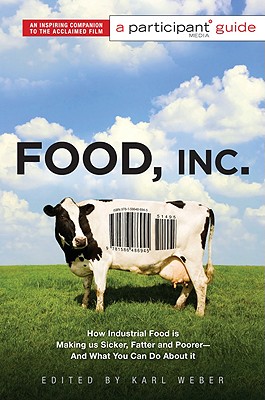
Food, Inc.

I have a crush on Eric Schlosser. I know he's not a movie star or even a farmer but he's got a way of talking about farm workers rights and corn that makes me soft inside. And then when he says, "Monsanto," and his hand flexes into a fist; what can I say?

I'm his.

I didn't read the book but I saw Food, Inc.. Not only does the movie star Eric Schlosser but Michael Pollan was there too. And so was Joel Salatin. They're the three stooges of the know-your-food movement. And I mean that with the utmost respect. These guys were awesome but they're funny too.

The movie was everything a sustainable food girl could want and yet it was just a taste of how food makes its way to the plate. There was a vignette on factory farmed animals, on the treatment of farm workers, of the growing rates of diabetes as a result of cheap food. There was a vignette on GMO's, on government subsidies, on the source of ingredients in food. The movie stayed succinct but could have taken off in any direction for hours. And I would have stayed for all of it.

There were a couple of times I covered my eyes, a couple of times I covered my heart. And a few times my own fist flexed into a fist and I wanted to punch the air and yell, "Yeah. Tell 'em. Way to go!" And then I would get all googley eyed when Eric Schlosser returned to the screen.

The most surprising information was related to the treatment of the migrant farm workers. Forget about how we treat the animals we eat, or the pesticides and fertilizers being flushed into our water ways. Forget about the destruction of top soil and the inability of farmers to save seeds because a patented GMO seed has blown onto their property. Forget about all of that and there are the human beings that handle the food. I wanted to cover my eyes, my heart and ears all at the same time.

The movie is not doom and gloom however. The Stoneyfield Farms guy is one happy dude. And the guys from Walmart? Complete comedic relief. Sure, there are challenges. When hasn't there been? But Food, Inc. is hopeful for the mere fact that it was made. That it's being distributed to major markets. That's it's been reviewed and talked about and linked all over the place.

A friend told me a year and a half ago that the sustainable food movement would never go mainstream. "It's just a trend," this friend said. This movie is not however a trend. It's ambitious, it's smart and hopefully it will whet the appetite for mainstream to start lifting the veil between kitchen tables and food producers everywhere. Hopefully it will raise the momentum of people voting with their forks for fair food that is considerate of all beings.

But mainstream better stay away from Eric Schlosser. He's mine!

Recommended: For people who eat.
Rated: 4 Stars (I don't want to set expectations too high and parts of it are a bit corny!)

Friday, June 12, 2009

Crisis and Opportunity

I'm going to be upfront about this and say that this is the ABSOLUTE BEST non-fiction book I have EVER read. EVER. I'm completely serious. Think about what Michael Pollan is to the food movement - then put him on steroids. THAT is what John Ikerd is to the sustainable agriculture movement.

Crisis and Opportunity: Sustainability in American Agriculture is a series of inspirational essays by John Ikerd, professor of agricultural economics at the University of Missouri. From the very first paragraph, I was drawn to his words, thinking as I read each word, "Yes, that's it exactly. I just couldn't put it into words myself."

Ikerd, while taking a look at the large-scale, big-picture crisis of American agriculture, takes an entirely different approach than contemporary eco-authors. Rather than addressing the culprits in the big picture (business, government, etc), he challenges each and every one of us to make change happen.
A farmer can make a difference in the land on his or her farm and in the land of others downstream. A farmer can make the difference in the lives of his or her customers and neighbors. We can all have an influence on the other people in our families, in our places of work, or in our communities. As we change our own lives in positive ways, we begin to influence those who share our little piece of the world. One by one, as we influence our little pieces of the world, the world begins to change.
Ikerd calls upon us to use common sense instead of relying strictly on impersonal technology. He calls us to do what is right, instead of what will make us the most money. Although making money (being economically viable) is certainly part of sustainability, our current industrial model focuses only on this component - consuming more for less. But the future, the sustainable model focuses on physical, mental, AND spiritual components, giving us a balance by being not only economically viable, but also ecologically sound and socially responsible.

Honestly, I've never read a book so full of inspiration, insight and hope. This isn't just a "must read." Crisis and Opportunity is a handbook for daily living and the beautiful awakening to a bright, new future.
Recommended: To anyone who lives and breathes.
Rating: 5 out of 5 stars!

Friday, May 8, 2009

The New Farmers' Market - A book review

If you're involved in founding, managing, promoting, or selling at a farmers' market, The New Farmers' Market is a MUST read! It came to my attention when a friend and market vendor suggested I read her copy. Somethings, she told me, I'd want to skim through, but she was convinced I'd like this book.

She was right! There's a section in this book for just about everyone. The New Farmers' Market is divided into 3 sections
  1. Selling at the market
  2. Starting, Managing, & Promoting the Market
  3. The New Farmers' Market (embracing the community and expanding the vision)
Touching on everything from obtaining insurance, to pricing strategy, to writing a catchy market newsletter, this how-to guide is full of practical ideas including tips from market vendors all over the U.S. Whether your market is large or small, new or established, you're sure to find inspiring ideas to reenergize your market team.

Personally, my favorite section was on promoting the market where I found a host of suggestions on bridging the knowledge gap between market and community. My favorite is for a monthly market newsletter. Fellow Friends Volunteers, guess what's we're doing next?

Look for The New Farmers' Market in your local library, or better yet, buy a copy to be shared among your market vendors, volunteers, and staff. The market of your dreams is only one book away...
Recommended: for anyone looking to work with a farmers' market
Rated: 5 out of 5 stars (for page after page of fabulous ideas)

Thursday, April 9, 2009

Book Review: Who Is In the Garden


As much as I love to find a great green read for me, even more I love it when I come across an excellent eco book for the kids. I've long had favorite fall books for the kids but this week came across a beautifully illustrated and artfully told journey through a summer garden. While not yet summer, my boys and I are talking about what to plant where and why. Vera Rosenberry's Who Is In The Garden? put pictures to our summer-time dreams. Following the garden-loving child, we skipped past butterfly bushes, snuck peeks at sleeping turtles and a sly mantis, and burrowed into a teepee of beans. Just a little inspiration for budding gardeners.

Happy Spring!

Monday, December 29, 2008

Book Review- "The More-With-Less Cookbook" by Doris Janzen Longacre


Except for being proficient at a couple types of cookies, I didn't even begin to learn to cook until I was in grad school. I lived in a co-op in which I was assigned to a "cooking team" and the head of our team sourced all our meals from the "More-with-Less Cookbook." When I moved on, I bought a copy of the book because it contained the recipe for my new favorite dinner. It would be a full 12 years before I read beyond that recipe!

My husband and I joke about it, now, but when we got married I was comfortable cooking two thingss: lasagna and boxed macaroni & cheese. And my husband didn't like boxed mac & cheese. I spent the first summer we were married devouring every cookbook I could find, and I started with More-with-Less. The book is a gold mine, but I should quit here and let our guest reviewer tell you the rest. Here's what Joyce from tallgrassworship has to say about it...

As our economic crisis deepens, and frugality has become the mode, I've thought more and more that I should post a review of "The More-With-Less Cookbook", by Doris Janzen Longacre.

As a young mom, living on a shoestring budget, and trying to learn how to cook from the large vegetable garden I grew to help feed my family, I came to rely on this remarkable little volume, with it's garden-to-table recipes, and instructions that emphasized cooking "from scratch". As a Christian, trying to align my lifestyle with the doctrine of justice for the poor, I loved it's emphasis on consuming only our fair share of the planet's resources, so that we could not only control our own budget, but have enough to give and share with others.

Amazingly, it's still in print, and available through Amazon.com, though Doris Janzen Longacre died of cancer in 1979, shortly after the publication of her second book, "Living More With Less". Both of these books were very influential for me, and have continued to color the way I look at homemaking over the years.

Longacre was commissioned by the Mennonite Central Committee to use her background as a dietitian to collect recipes and ideas from the world-wide Mennonite community and adjust those recipes to reflect contemporary nutritional research and food justice issues. Many of the recipes submitted by the mostly agrarian Mennonites were heavy on sugar and fat. Longacre experimented to readjust them so that the well-loved family dishes could be enjoyed just as much, but with healthier ingredients. She collected many meatless dishes, reflecting our growing understanding of the impact of raising livestock on our environment. She gave good, clear teaching regarding moving away from a meat-heavy diet while maintaining good nutrition. At the same time, she managed to celebrate the Swiss-German and Russian culture at the heart of the Mennonite denomination, and elevate the custom of unpretentious hospitality.

I practically wore this book out! It was my essential guide for learning to cook for my growing family for years. In pulling it out to reread the other day, I was flooded with memories of days in our kitchen, surrounded by small children who always wanted to stand on a chair next to me and "watch" as I worked with produce from the garden, or bulk items from a foster parent's food co-op we were part of, or the bags and bags of apples from a second cousin's orchard. Many a dollar was stretched, many a tummy was filled, based on the information and recipes found in this wonderful cookbook.

I hope that you will find a copy of "The More-With-Less Cookbook" and read it, really read it, and absorb the wonderful spirit of Longacre and the Mennonite cooks who submitted recipes to this collection. It has a place in every kitchen where the cook(s) are focused on meals made with love. I'd give it a 5 out of 5, for sustainable and frugal living.

Wednesday, December 10, 2008

From Australia - Bottomfeeder

I literally got a huge smile the other day when I found a review of Bottomfeeder at Kathryn's blog, Limes & Lycopenes. It was one of my top five books this year.

One of the things that made me smile about this review is Kathryn found three different covers for the book. And then of course I smiled because she liked the book and I liked the review. If you give Bottomfeeder a read, I hope you do too. In any event, big thanks to Kathryn in Australia for sharing the review.
I’ve been buying some books recently. All sorts of volumes. Books about food, nutrition and cooking. As well as some meaty stuff on sustainability and the ethics surrounding what we eat.

And the first one is Bottomfeeder.

While it seems like one of those worthy books, the sort of thing you know you should read, but don’t really want to, Bottomfeeder is an absolute beauty.In it Taras Grescoe goes on a world tour, eating fish as he travels. He interviews restauranteurs and marine biologists, visits fish markets and joins fisherman out on their boats. All the while looking at the effects we humans are having on sea life.

Each chapter tells a story. About a location and a specific fish. From oysters in Chesapeake Bay, cod sold at the local chippy in Britain, through to sardines in the Med, shrimps in India and bluefin tuna sashimi in Japan, Taras Grescoe examines how what we eat impacts the local fish stocks. And the local environment.

It’s an alarming book. Grescoe’s account of our declining marine environment is worrying reading and he doesn’t shrink from the complexities and difficulties we face.

However, it’s beautifully written: full of humanity, a sense of history, humour and smart commentary. Plus wondrous descriptions of the actual fish themselves: the often bizarre creatures from the deep we catch and eat, yet know so little about.Taras Grescoe is a fish eater and after writing and researching the book, he is determined to keep on eating fish. However he wants to choose fish that is managed and caught sustainably. Therefore at the very end of the book, separated into the three groups No, Never; Depends, Sometimes and Absolutely, Always, is a list of what fish to eat and what to avoid.

W‎hile there is an increasing amount of information available on many aspects of eating sustainably, I’ve found good, smart information on fish hard to find. Taras Grescoe’s book fills many of these gaps.

If you’re interested in climate change, sustainability and where the food you eat comes from, then Bottomfeeder is an important book.

Wednesday, November 12, 2008

A Platter of Figs

I rarely use cookbooks for a recipe, I only wish I were that kind of a cook, but they do feed me in a different way. I take note of spices, of combinations, of what ingredients are first toasted, mixed, set aside. I read through lists of ingredients, smelling or imagining the texture of each one. I put an apron in my mind and store the knowledge somewhere between my taste buds and pantry shelves. And then I look at the pictures. It's frivolous but it makes me happy. A Platter of Figs makes me happy.

The photography is delicious. I want to eat the light and the raw beauty of the food primarily unadorned is stunning. The menus are arranged by season which is another of my favorite parts of this book as that's the way we eat. When it's winter, our meals reflect it and I want to cultivate my instinct to make the best of that time. The author, a chef at Chez Panisse six months out of the year, encourages improvising and making the best out of what's available. He knows seasonal cooking.

My last favorite part of the book is that each menu begins with a vignette that provides a back drop to the recipes. The stories make the recipes personal, they prop the kitchen door open and invite the reader in. They're an invitation to notice the stories around the food in our own kitchens, where it came from, how it got there and to think about the people along the way.

And that's a good invitation to accept.

Do you have a favorite cookbook that inspires and makes you happy?

Sunday, November 2, 2008

Vital Signs 2007-2008


I found a fantastic little handbook that takes the pulse of our globe in only 166 pages if you read the notes and bibliography. Vital Signs 2007-2008 from the WorldWatch Institute provides a clear overview of an extensive range of scientific data on key indicators across our planet. The bibliography of scientific studies stretches for 35 pages with every indicator studies backed up by cold, hard facts.

The introduction provides a profound quote from Utah Phillips, an American Labor organizer and folk singer. He said: "The earth is not dying. It is being killed, and the people killing it have names and addresses." Vital signs goes on to say, and to prove that the planet is not dying, but "ecological systems are. And the names of people killing them include political leaders, corporate executives, and millions of ordinary people who are part of an unsustainable consumer economy." (p. 9)

Vital Signs tracks a variety of key indicators for global health. I"m shamelessly pulled this from their web site as they document it nicely:

Food and Agriculture Trends
Grain Production Falls and Prices Surge
Soybean Demand Continues to Drive Production
Meat Output and Consumption Grow
Seafood Increasingly Popular and Scarce
Irrigated Area Stays Stable

Energy and Climate Trends
Fossil Fuel Use Up Again
Nuclear Power Virtually Unchanged
Wind Power Still Soaring
Solar Power Shining Bright
Biofuel Flows Surge
Carbon Emissions Continue Unrelenting Rise
Weather-related Disasters Climb
Ozone Layer Stabilizing But Not Recovered

Social and Economic Trends
Population Rise Slows But Continues
World is Soon Half Urban
Economy and Strain on Environment Both Grow
Steel Production Soars
Aluminum Production Continues Upward
Gold Mining Output Drops Slightly
Roundwood Production Up

Transportation and Communications Trends
Vehicle Production Rises Sharply
Bicycle Production Up Slightly
Air Travel Reaches New Heights
Cell Phones Widely Used, Internet Growth Slows

Conflict and Peace Trends
Number of Violent Conflicts Steady
Peacekeeping Expenditures Hit New Record
Nuclear Weapons Treaty Eroding

Food and Agriculture Features
Agribusinesses Consolidate Power
Egg Production Doubles Since 1990
Avian Flu Spreads

Environment Features
Climate Change Affects Terrestrial Biodiversity
Threats to Species Accelerate
Invasive Species Drive Biodiversity Loss
Ocean Pollution Worsens and Spreads
Bottled Water Consumption Jumps
Sustainable Communities Become More Popular

Social and Economic Features
Progress Toward the MDGs Is Mixed
Literacy Improves Worldwide
Child Labor Harms Many Young Lives
Informal Economy Thrives in Cities
Socially Responsible Investment Grows Rapidly

Health Features
HIV/AIDS Continues Worldwide Climb
Malaria Remains a Threat
Male Reproductive Health Declines

This little handbook isn't necessarily uplifting, but it provides me with clear data to incorporate in my own research and writing. It also dispels many of the willy-nilly statements I hear about skewed data and/or cyclical cycles. (And there are some, but it doesn't account for everything that we see in our systems). I also loved the charts, graphs and photographs that capture the data in a very usable manner.

Vital
Signs also provides for narrative facts that are useful and intriguing. For example, the Inuits in the Arctic are now using air conditioners for the very first time. (p. 42) Fishing employs 38 million people worldwide, and as many species are farmed out and our oceans are polluted we have vast economic and job related issues to consider as well as a concern about food source. (p. 26) The portion of adults in the world that have basic reading and writing skills is now up to 82% (p. 110) and I say hooray to that.

I know it isn't a book of joy for the most part, but it is a book of clarity in data and issues. As a lover of facts and figures from time to time I found it an interesting though eye opening read. If you are a lover of data and part of a Green-centric movement, then this may be a valuable resource for you.

Thursday, October 30, 2008

The Berenstain Bears and Too Much Junk Food


I'm going to take us on a spin with a great food book for a kid, and one that reinforces many of the things that we are aiming for with a focus on fresh food. You just can't beat The Berentain Bears and Too Much Junk Food by Stan and Jan Berenstain to reinforce the message of fresh simple food. If you've been busy reading books like In Defense of Food, help bring a little awareness to the little Greenies with the help of Mama and Papa Bear.

Mama started to notice a problem in her house and with her little cubs. They were depending on things like Yum Yums and Sugar Balls for snacks and food. The whole "food product" as opposed to "food" issue that we parents are working on! One day she looked over and noticed that they weren't as active and adding inches to their bodies. Just like any good Mama Bear, she decided to renovate her family lifestyle.

I have to giggle at Papa Bear giving support to Mama only to balk at the rules being applied to him! What! No Sweetsie-Cola!! He decides to support the family efforts when he leans over only to rip the back of his pants.

The family goes on a collective fresh food diet with water, food from their garden, carrot sticks, nuts and raisins for snacks. Mama takes the children all to the doctor so that they can learn more about nutrition and everybody gets their Bear butt into gear and begins to exercise. They even ran a family day marathon style race together, and though tempted to treat themselves they celebrate with more good food.

O.k., so it sounds way to idealistic. But it really isn't. The Berenstains manage to do it in a very approachable fashion that gets the message across to kids. The illustrations are charming, and each family in America will see a smooch of themselves in the story. This was published back in 1985, and 23 years later we are finally getting on the bandwagon for discussing all the issues about food, health, diet and exercise with kids that they were already writing about "back" then.

My kids followed up on their story by wanting more books at our Library on junk food and the inside workings of the human body. Fun! It introduced the topic of the skeleton, nerves, digestion and the brain. We've read it so many times and it reinforces what this Mama Bear says about junkety-junk food.

Be prepared to (gulp) answer a few uncomfortable questions about your own lifestyle after this book. Lio actually pinched a little bit of the Mama scooch to ask why I had fat there like Papa Bear. (You will see this in the story). I replied that this is why we are eating so many veggies in our family and why Mama has to go to the gym to lose a little weight and feel good. You know, why Mama has to go and why you need to play lots outside! Blush.

You will have to answer a few questions to your kids about food choices if you do focus on the book and talk about it. But hey, isn't that what we all really want? Your local Library should have a copy handy, or just ask them to find it for you.